Think of your Shopify store. You might have listed some amazing home decor products. But a messy checkout holds your website back. Your shoppers left their favorite product in the cart and never returned. Eventually, sales drop even when it’s a flash sales season.
That’s what a confusing interface and inconsistent website design can lead to.
However, the right design keeps your website well-structured and brand identity consistent across all touchpoints. It reinforces customers' engagement, recognition, trust, and revenue. All you need is a strategic design framework in place and a little discipline. If you are developing your visual identity from scratch, you can create a logo that reflects your brand and works consistently across your store.
Let’s see how a consistent brand identity works and how to implement it to turn hesitant visitors into confident buyers.
But first, let’s look at the following.
The Core Elements of Consistent Branding in Web Designs
Consistent branding shapes how smoothly your website works and how customers feel using it. These elements fall into two groups: visual and structural.
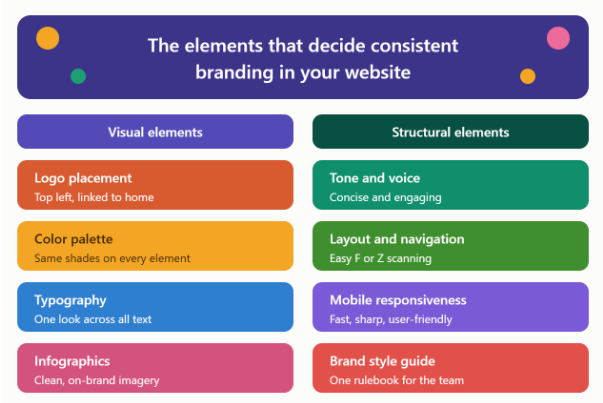
Visual elements
- Logo placement: Typically, the most prominent place for this is the top left corner. When placing it across pages, you should maintain the same size and link it back to your homepage to protect your logo.
- Color palette: Uncoordinated color palette, for example, full of different shades, competing saturations, or mixing undertones, can kill the visual impression. Use the same colors on buttons, icons, and other UI elements so visitors recognize your brand effortlessly.
- Typography: You may prefer a modern, professional, casual, or witty personality. When your typography remains readable and visually compelling in headings, sub-headings, CTA, or body texts, it sets the visual tone of your website and makes your brand easier to remember.
- Infographics: Turn key data into simple visuals, such as product comparisons, customer stats, or step-by-step guides. Use your brand colors and fonts in every graphic. This keeps them on-brand and makes complex information easier to scan.
Structural elements
- Tone & voice: While a brand tone emotionally connects with your audience, the brand voice keeps the personality and engagement consistent. So, when you’re closing a product description, an error message, a comparison blog post, or the homepage, ensure your brand tone and voice carry the same value.
- Layout & navigation: Clean menus, quick filters, a smooth check-out, and bold buttons, these are where your web visitors decide what to look at next. Arrange key content along the F-pattern or Z-pattern, the natural paths people’s eyes follow when scanning a page.
- Mobile responsiveness: Your website’s design, speed, and navigation must work well on mobile, because that’s where most of your customers are. A user-friendly mobile experience can help lower the bounce rates.
- Brand style guide: This is your custom rulebooks that define how your web designs stand out in the crowd. Share it with your team to remain on the same page from the beginning.
Let’s understand all this better with an example. TTM bakery’s Webflow template shows how visual consistency works in practice. It pairs a minimalist layout with bold headlines and a warm uniform color palette. Product cards, icons, and buttons all follow the same style across the page. As a result, visitors can browse comfortably and recognize the brand at a glance.
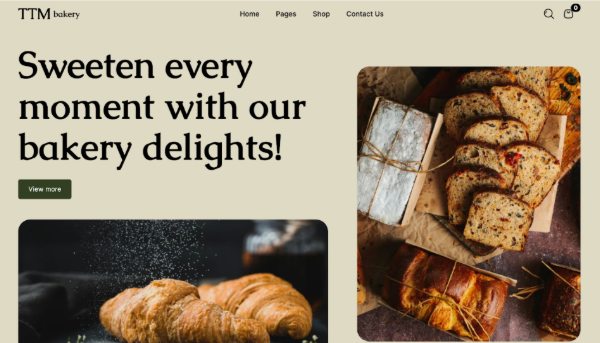
Source: TTM bakery
How Does a Website’s Consistent Brand Identity Win Customers?
The game starts when brand consistency in your web design describes your customer journey: Discover → Evaluate → Decide → Purchase.
- Discovery: How does your target audience find your website?
- Evaluation: Can your web visitors easily navigate to understand your products or service information?
- Decision: How does your website help ready-to-buy visitors make a confident choice?
- Purchasing: Can your customers complete the purchase without unnecessary friction?
Every stage of interaction should give clarity to your web audience. When clarity and consistency outweigh uncertainty, your brand benefits in three significant ways.
- Reinforced brand recall: Clean, relevant visuals and plain jargon-free language keep visitors focused on what matters in your website. This focus makes your brand easier to remember. Over time, it closes the gap between interest and action and helps turn your browsing audience into buyers.
- Trust, credibility, & loyalty: Every brand has a unique story, voice, and personality that builds connections between brands and clients. The same is true about your brand too. When it remains consistent, it makes visitors see your brand as trustworthy and they’ll hesitate to drop off from the purchase.
- Improved conversion rates: Trust and loyalty facilitate conversion through a comfortable shopping experience. Fulfill your customers' needs by providing clear information, a simple check-out, and a smooth interface at first glance.
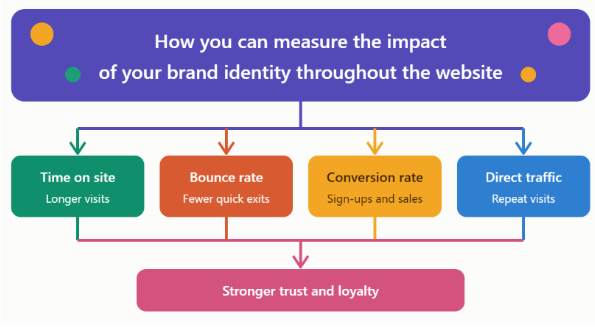
How to Maintain Consistent Branding in Your Web Design & Earn Trust
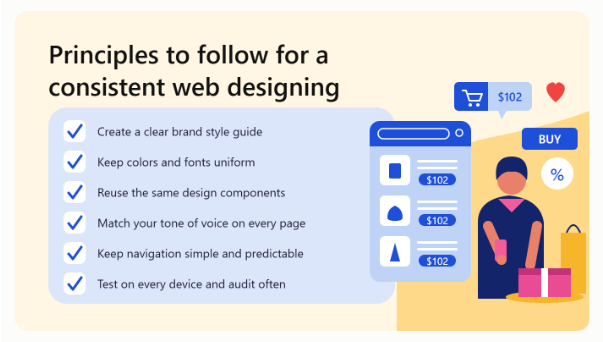
1. Define your website requirements
Kick off the very first step by determining what your website needs.
- What kind of page structure and content is feasible for your web branding? (e.g., a digital marketing brand’s website might have three pillar pages, but 15 supporting pages). The foundation decides where you’re heading.
- What do you want your customers to do when they’re hovering over your website? (e.g., buy, subscribe, contact, or download). The buttons, forms, filters, and CTAs must be placed around that to direct the next step.
- What kind of theme, color contrast, typography, or infographics do you want to embed? (e.g., professional, informal, or slightly witty). It goes along with your growing brand.
- What more do you want to develop to be ready for scaling up? (e.g., plugins, APIs, AI assistants, custom integrations, and multilingual support). Planning these features early gives you room to grow without rebuilding your website later.
Settling your structure and goals first will save you trouble later. On the other hand, picking designs before setting goals can leave you with a website that doesn’t feel like yours.
Once your requirements are clear, you need a team that can turn them into a working site. If you’re unsure where to start or stuck with an outdated design, Web Design in Brisbane can help. Their team builds high-performance and responsive websites with a custom design and a strong SEO foundation.
Similarly, if you’re redesigning an existing site, they also handle technical SEO and site migrations. Conversion rate optimization is built into every project, so more of your visitors turn into leads. They work mainly with service-based and eCommerce businesses that want sites their own teams can manage easily.
2. Design around customer intent
Next, think of the difference between your first-time web visitors and loyal buyers. Not every visitor comes to your website with the same needs or goals.
- A first time visitor to a SaaS brand’s website may ask, “Where do I find API integration documentation?”.
- A returning D2C customer may ask, “When will my favorite moisturizer be back in stock?”
- Another customer may land on your website to compare products and their subscription-based offerings.
You should give them clear directions to choose an appropriate path so they find answers to their queries. For example, custom filters, strong search recommendations, and a clear button CTA upon your product listing pages can help them explore what they want.
A case study with a brand found that switching from a text-based CTA to a button CTA increased the clickthrough rate by 32.12%.
3. Prioritize performance & accessibility
You might sell great skincare products, an AI-native CRM, or a knowledge management platform. Either way, your website shapes how easily customers find what they need. It also shapes what they think of your brand.
For example, product galleries with large catalogs need sorting and quick filters. Let shoppers filter by useful attributes like size, colour, and price. The search should handle typos and partial terms, so visitors find products without typing exact names.
Or, let’s think about mobile search behavior. The website shouldn’t just compress the layout for a mobile version, but load it quickly without overwhelming your visitors. According to the Google’s Core Web Vitals guide, your page’s main content should load within the first 2.5 seconds for a good user experience.
4. Reduce friction before checkout
This is where trust and, eventually, conversion can make or break.
Think of your customers facing long and confusing forms at checkout. Or they’re struggling to find your best-selling products, which should be right on your homepage.
When key information is hidden, or customers hit unfamiliar patterns and surprise steps, they leave. That’s costly, since the average documented cart abandonment rate is already 70.22%, according to Baymard Institute research.
Common Pitfalls You Should Avoid In Web Design
Sometimes rushed decisions or small oversights can return to haunt you later. So, while designing your website from scratch or rebranding the old one, take note of the following:
- Eliminate tonal and messaging drift. If your homepage sounds witty, your product pages shouldn’t suddenly turn stiff and formal. A shift in tone can erode the brand message.
- Avoid breaking typography rules. The right typography is set with a defined hierarchy, proper spacing and text alignment, and readable fonts. Otherwise, it creates visual noise.
- Don't be overcrowded with data. You may want to include industry insights, quick feature explainers, or screenshots from your products into your webpages. But don’t overdo it. These are tempting as long as they are relevant and in the right dose.
- Put aside your uncoordinated color palette. Instead of depending on a mix of multiple colors, tones, shades, smartly use RGB, CMYK, or HEX codes.
Turn Visitors Into Buyers With Consistent Brand Identity
Your website reflects your brand. It should also answer the silent questions every visitor asks:
- Is this product right for me?
- Can I trust what I’m seeing?
- Can I buy it easily?
- Will they help me after I buy it?
Visitors weigh these questions every time they land on your site. So, your website must be designed around your customers’ needs, trust, and convenience, keeping consistent brand identity in mind
If you want a website where visual storytelling flows seamlessly, and technical aspects and informational architecture complement each other, connect with DesignCrowd.
Written by DesignCrowd on Monday, November 16, 2026
DesignCrowd is an online marketplace providing logo, website, print and graphic design services by providing access to freelance graphic designers and design studios around the world.
